Hardwood flooring is one of the most timeless and beautiful choices for any home. Its natural warmth, durability, and elegance make it a favorite among homeowners in Carson City, Reno, and across Northern Nevada. But hardwood also comes with a unique characteristic: it reacts to its environment.
Changes in temperature and humidity can cause hardwood to expand, contract, or even warp if not cared for properly. Understanding how climate impacts your floors — and what you can do to protect them — is the key to enjoying hardwood for decades.
1. Why Hardwood Reacts to Climate
Wood is a natural material. Even after it’s cut, milled, and finished, it still responds to the air around it.
Humidity: When the air is humid, hardwood absorbs moisture and expands.
Dry Air: When the air is dry, hardwood loses moisture and contracts.
Temperature Swings: Hot summers and cold winters intensify these changes.
In regions like Northern Nevada, where summers are hot and dry and winters bring snow and indoor heating, these shifts can be especially noticeable.
2. What Can Happen to Hardwood Floors
If hardwood isn’t managed properly, you may see:
Cupping: Boards curl upward at the edges when they absorb excess moisture.
Crowning: Boards swell in the middle when moisture rises through the subfloor.
Gapping: Dry air pulls moisture out, creating visible gaps between boards.
Buckling: Extreme cases where boards lift completely off the subfloor.
3. Engineered Hardwood vs. Solid Hardwood
Solid Hardwood: Gorgeous and long-lasting, but more sensitive to changes in humidity.
Engineered Hardwood: Made with multiple layers, making it more stable and less likely to expand or contract. This option is often better for climates with big seasonal shifts, like Carson City and Reno.
4. How to Protect Hardwood Floors in Northern Nevada
Use a Humidifier in Winter: Indoor heating dries the air — keeping humidity between 35–55% prevents gapping.
Control Moisture in Summer: In humid months or during snowmelt, use dehumidifiers and proper ventilation.
Rugs & Mats: Place mats at entryways to catch snow, salt, and moisture.
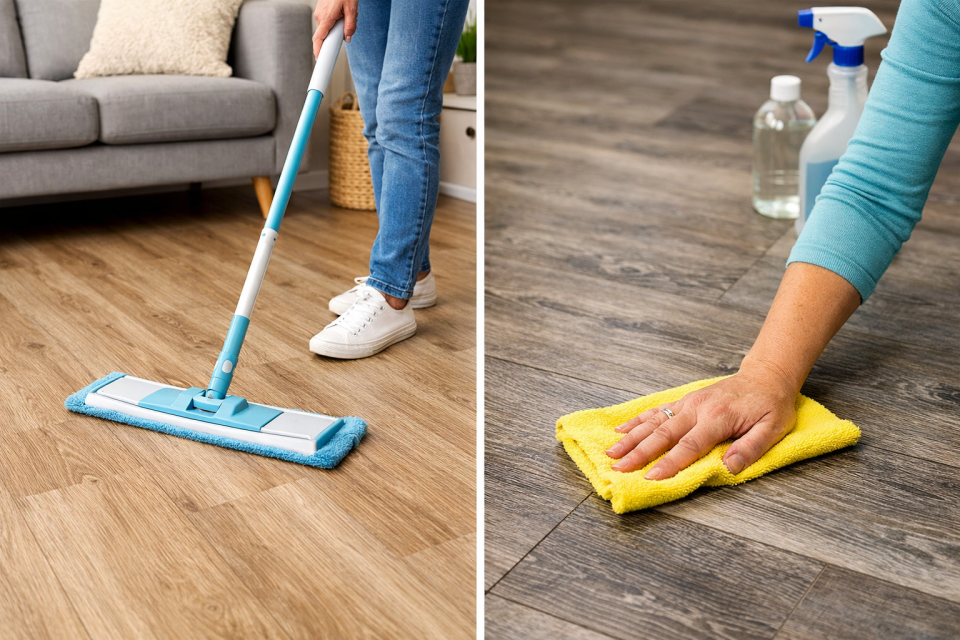
Regular Maintenance: Sweep often and clean spills right away. Avoid soaking your floors with water.
Professional Installation: A proper subfloor, acclimation period, and expansion gaps are crucial in climates with large seasonal changes.
5. Why Local Expertise Matters
Hardwood floors in Nevada face very different conditions than those in coastal states or humid regions. Choosing the right type of hardwood — and having it installed by local experts who understand our climate — makes all the difference in how long your floors last.
✨ Final Thoughts
Hardwood floors are a beautiful investment that can last for generations — but only if they’re treated with the care they deserve. In Carson City, Reno, and Northern Nevada, climate and humidity should always be part of your decision when selecting, installing, and maintaining hardwood.
At Landmark Flooring, we specialize in helping local homeowners choose hardwood that fits their lifestyle and withstands our region’s unique climate. From solid oak to engineered hickory, we’ll guide you to the perfect floor — and help you keep it looking great for years to come.
📍 Visit our Northern Nevada showroom today to explore hardwood flooring built for beauty, durability, and local living.