
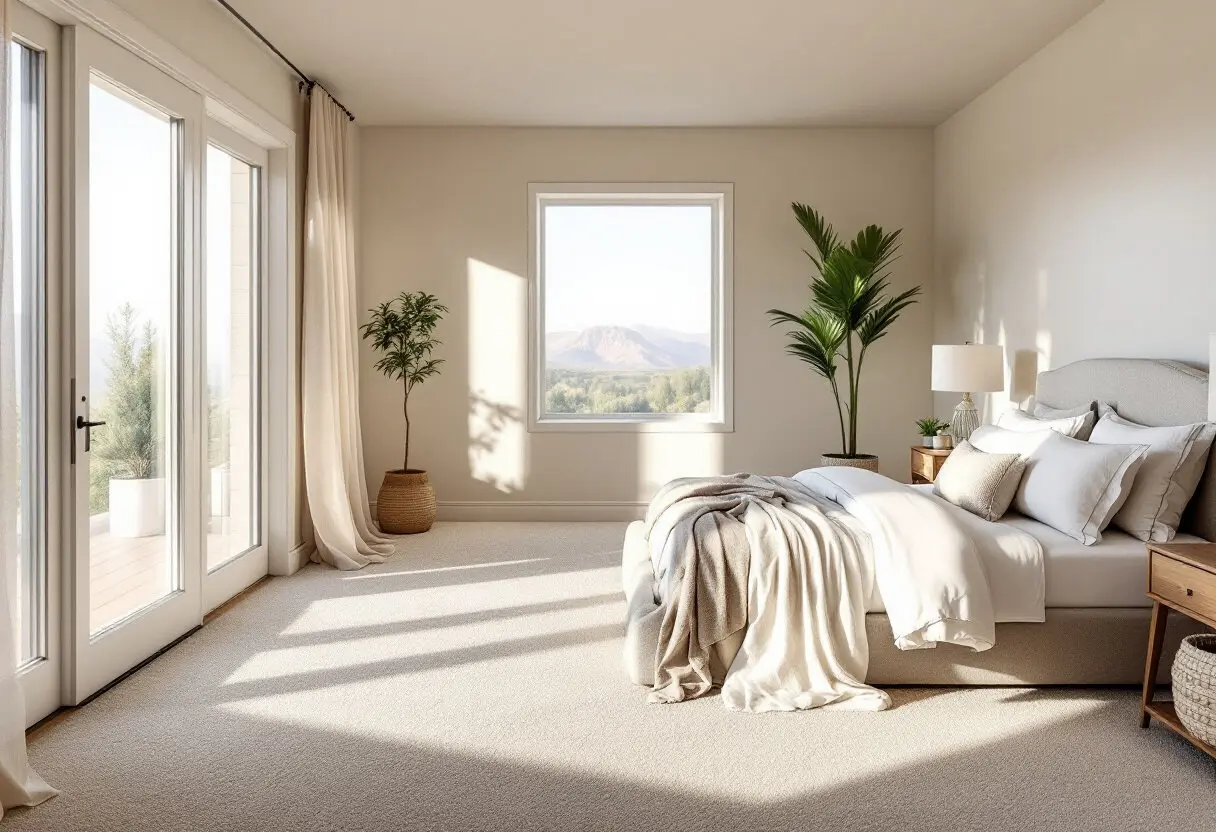
The short answer: for most Northern Nevada homes, a nylon or triexta carpet with a dense, medium-height pile and a firm pad is the safest all-round choice. Polyester is a soft, budget-friendly pick for bedrooms. Wool is a premium option, and a thin, springy pad is better than a thick, squishy one. Here's how to choose with confidence.
Start with the fiber
The fiber decides how your carpet looks in five years, not just on day one. Our carpet page covers the full range, but here are the main types:
- Nylon: the most resilient mainstream fiber. It springs back from foot traffic and furniture, which makes it the go-to for stairs, hallways and busy households.
- Polyester (PET): very soft, with rich color and natural stain resistance. It can mat down faster in heavy-traffic spots, so it suits bedrooms and low-traffic rooms best.
- Triexta: a newer fiber known for built-in stain resistance and good durability, a strong fit for homes with pets and kids.
- Wool: a natural fiber that's durable and wears beautifully, usually at a higher price. It needs more careful cleaning than synthetics.
If you're deciding between carpet and a hard surface for a busy household, our guide to flooring for pets and kids weighs the options.
Pile style: how the surface is built
Pile describes how the carpet fibers are cut and looped, and it changes both the look and how the carpet wears.
- Cut pile (including plush and textured): soft, upscale and comfortable underfoot. Plush shows footprints and vacuum marks, while a textured cut pile hides them better.
- Loop pile (like Berber): firm, durable and good at hiding dirt. Large loops can snag on pet claws, so choose a tight, low loop if you have animals.
- Cut-and-loop: mixes both for a patterned, sculpted look that disguises wear.
Density matters as much as style. Press your thumb into a sample: the more tightly packed the fibers, and the harder it is to see the backing, the better it will hold up. A dense, low-to-medium pile outlasts a tall, loose one almost every time.
Don't skip the pad
The cushion underneath is one of the cheapest ways to make carpet last longer and feel better. It absorbs impact, reduces noise and keeps the backing from wearing out against the subfloor.
- Pick firm over fluffy. A thick, soft pad makes carpet feel luxurious in the showroom, but it lets the carpet flex and stretch, which can cause wrinkles and early wear.
- Check the density, not just the thickness. A denser, thinner pad usually performs better than a thick, lightweight one. Ask what the carpet maker recommends, since using the wrong pad can affect the warranty.
- Think about moisture. Pet-prone rooms and basements benefit from a pad with a moisture barrier.
What matters in Northern Nevada
Our high-desert climate changes what you should look for in carpet:
- Dry air means static. Winter humidity is low, and some carpets build up more static than others. Ask about anti-static features, and expect a humidifier to help.
- Sun fades. Bright, south- and west-facing rooms can bleach lower-quality fibers over time. Solution-dyed fibers, where the color runs all the way through, hold up best. Window coverings help too.
- Dust and grit. Our fine desert dust works its way into a carpet, so a good doormat and regular vacuuming do more for its lifespan than any fancy product.
For more on how our weather affects every floor in the house, see our post on the best flooring for a high desert climate, room by room.
Where carpet makes the most sense
Carpet is a natural fit for bedrooms, family rooms and stairs, where softness, warmth and sound absorption count most. In kitchens, bathrooms, laundry rooms and entries, a hard surface usually works better. If you want a mix, luxury vinyl in the wet and messy rooms with carpet in the bedrooms is a very common pairing. Our LVP vs. laminate vs. hardwood guide can help with the hard-surface side of that decision.
| Nylon | Polyester | Triexta | Wool | |
|---|---|---|---|---|
| Resilience | Excellent | Fair; can mat down | Very good | Very good |
| Softness | Good | Very soft | Soft | Soft, natural feel |
| Stain resistance | Good with treatment | Naturally strong | Built-in | Needs careful cleaning |
| Best fit | Stairs, halls, busy homes | Bedrooms, light use | Pets and kids | Premium, low-traffic rooms |
Installation makes the difference
Even the best carpet looks poor if it's stretched badly or seamed in the wrong place. A proper job means careful measuring, a clean subfloor, the right pad and power-stretching so the carpet stays tight. Our carpet installation is done by skilled installers, and we warranty our labor. Before you buy, ask to see samples at home in your own light, since carpet color shifts a lot between a showroom and a bedroom window.
The bottom line
Choose the fiber for how hard the room will be used, the pile for the look and feel you want, and a firm pad underneath. Then let a pro install it right. Our estimates are free, and financing is available if you'd like to spread out the cost.