
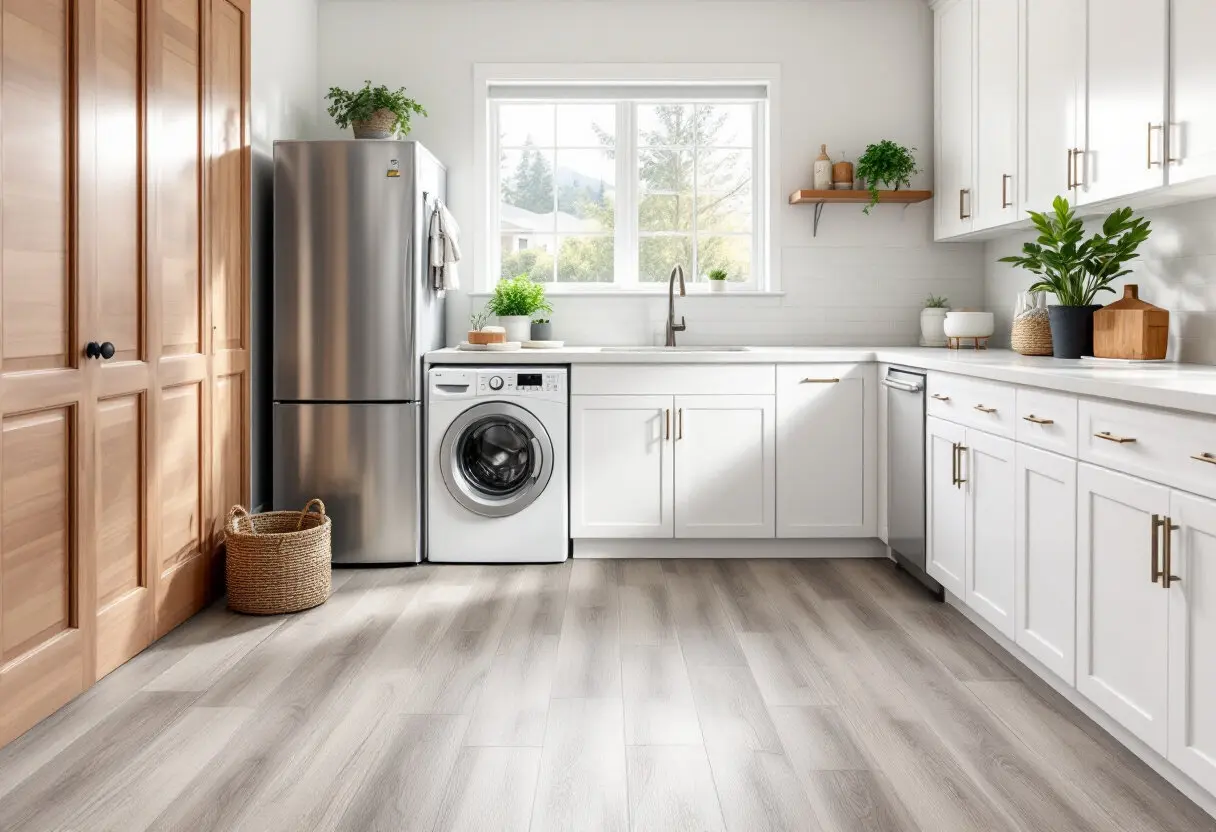
The short answer: choose sheet vinyl when you want the fewest seams in a small, wet room on a budget. Choose luxury vinyl plank (LVP) when you want a more realistic wood or stone look, easier repairs and a floor that forgives an imperfect subfloor. For most Northern Nevada kitchens, LVP is the better all-rounder, and sheet vinyl still earns its place in laundry rooms and baths.
What's the difference?
Sheet vinyl comes in a roll, usually 6 or 12 feet wide, and is cut to fit the room and glued down. In many bathrooms and laundry rooms, one piece covers the whole floor with no seams at all. It's thin and flexible, and the pattern is printed on the surface.
Luxury vinyl plank is made of individual planks or tiles, usually with a thick, stiff core and a clear wear layer on top. Most planks click together and float over the subfloor, though some are glued down. You can read more on our luxury vinyl page.
Water: which handles it better?
Both are made of vinyl, so neither soaks up water the way wood or standard laminate does. The difference is the seams. A one-piece sheet has none to worry about, which makes it a strong choice around toilets, tubs, washers and water heaters. Waterproof LVP is also a very good choice, but water that sits long enough can work its way through the joints between planks, so spills should still be wiped up and appliance leaks dealt with quickly.
If a room has a history of leaks, say so when you ask for an estimate. It affects both the product and how the floor is installed.
Looks and feel
This is where LVP pulls ahead. Planks are thicker and have embossed texture that follows the printed wood grain, so they look and feel much closer to real wood or stone. Sheet vinyl has improved a lot, but it's flatter underfoot and its patterns repeat across the roll.
If the room opens onto the rest of the house, LVP also makes it easy to run the same floor from the kitchen into the hall and living area. With a visible pattern break at a doorway, sheet vinyl tends to look like a separate room.
Comfort, noise and wear
- Underfoot: sheet vinyl is softer and slightly warmer than a hard core. Some LVP products have an attached underlayer for added cushion and sound control.
- Dents and scratches: thicker wear layers on LVP generally stand up better to dropped pans and pet claws. Sheet vinyl can gouge or tear if something sharp is dragged across it. Our guide to flooring for pets and kids covers what to look for.
- Heavy appliances: use protective pads under fridges and ranges on either floor, and don't drag them when you move them.
The subfloor matters more than you'd think
Because sheet vinyl is thin and glued down, bumps, seams and screw heads in the subfloor can show through over time. It needs a smooth, clean base, which often means a layer of underlayment first. A thicker rigid-core LVP is more forgiving of small imperfections, though neither one is a cover-up for a damaged subfloor. Older Carson City homes in particular can have uneven or patched floors under the old covering, so it's worth a look before you choose.
Repairs and long-term care
If a single LVP plank gets damaged, a click-lock floor can often be repaired by replacing just that plank, as long as you kept a few spares. Repairing sheet vinyl means cutting out and patching a section, and the patch can be hard to hide. On the other hand, sheet vinyl has so few seams that there's less to collect dirt. Both clean up easily with a broom and a damp mop. Skip abrasive scrubbers, and check your maker's care instructions before using any cleaner.
Northern Nevada factors
Vinyl handles our dry winters far better than solid wood, but temperature still matters. Vinyl products are sensitive to cold, and they expand and contract with heat, so the material should sit in the house to acclimate before installation, and sunny rooms need care. For more on this, see our post on the best flooring for a high desert climate, room by room.
| Sheet vinyl | Luxury vinyl plank | |
|---|---|---|
| Seams | Often none in small rooms | Many (between planks) |
| Look | Printed pattern, flatter surface | Realistic wood or stone, textured |
| Dent & scratch resistance | Fair; can gouge or tear | Generally better, with a thicker wear layer |
| Subfloor | Needs a very smooth base | More forgiving |
| Repairs | Cut-out patch | Replace single planks (click-lock) |
| Best fit | Small, wet rooms; tight budgets | Kitchens, open layouts, busy homes |
So which one should you pick?
- Choose sheet vinyl for a small bathroom or laundry room where a seamless floor and a lower material cost matter most.
- Choose LVP for kitchens, entries and any room that flows into the rest of the house, or when you want the look of real wood.
- Consider laminate or hardwood instead if you're after a different feel entirely. Our LVP vs. laminate vs. hardwood guide compares them side by side, and our laminate page covers the details.
The bottom line
Neither floor is better in every room. The right choice depends on the space, the subfloor, your budget and how you live in the house. The best way to decide is to see samples in your own light and have someone look at the room. Our estimates are free, we offer warrantied vinyl installation, and financing is available if you want to spread out the cost.