
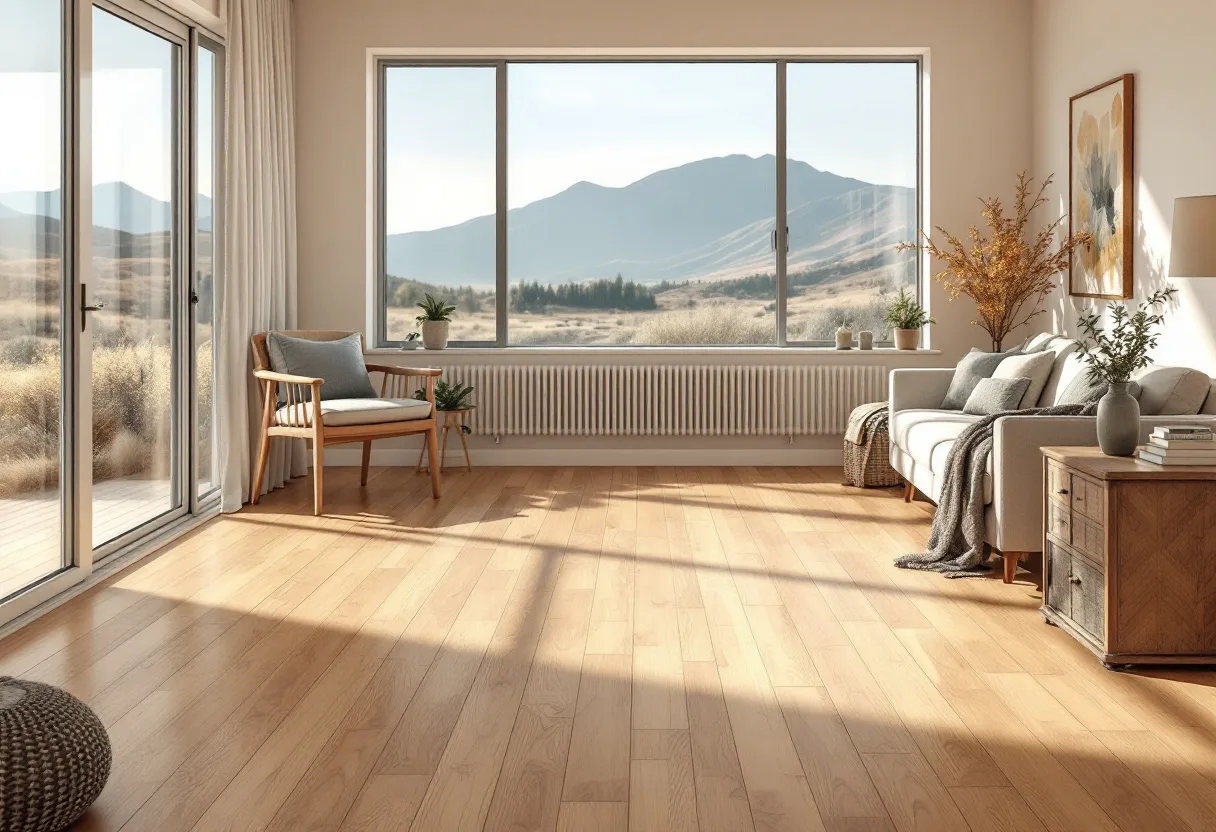
The short answer: for most Northern Nevada homes, engineered hardwood is the safer choice. It stays more stable through our dry winters and can go over more kinds of subfloors. Solid hardwood is still a great floor if you want the longest-lasting, most-refinishable surface and you're willing to manage indoor humidity. Either way, the wood has to be acclimated and installed well.
What's the difference?
Solid hardwood is exactly what it sounds like: each plank is a single piece of wood, usually about three-quarters of an inch thick, cut from one species such as oak, maple or hickory. It's nailed or stapled to a wood subfloor.
Engineered hardwood has a real-wood top layer, called the wear layer, bonded to a core of plywood or other layered wood. The layers run in different directions, which helps the plank resist the swelling and shrinking that wood does as the air changes. Both types are real wood on top, so both can be stained, finished and sold in the same species and looks. You can see what we carry on our hardwood flooring page.
Dry air: how each one behaves
Wood takes on and gives off moisture with the seasons. In Northern Nevada, winter heating and low outdoor humidity can pull a lot of moisture out of a floor, and boards respond by shrinking. With solid wood, that usually shows up as small gaps between planks in winter that close up again when the air gets more humid.
Engineered planks move less because of their layered construction, so gaps tend to be smaller and less common. But "less" isn't "none." An engineered floor in a very dry house can still show gaps, and in extreme dryness the thin top layer can even check or split. The floor type matters, but steady indoor humidity matters just as much. We cover this more in our post on the best flooring for a high desert climate, room by room.
Refinishing: how many lives does the floor have?
This is where solid hardwood earns its reputation. Because it's wood all the way through, it can be sanded back and refinished several times over the life of the house. Sources vary on the exact number, so treat any single figure with caution, but a solid floor generally has the most sanding left in it.
An engineered floor's refinishing potential depends entirely on the thickness of its wear layer. A thicker layer can usually be sanded and refinished once or more, while a very thin one may not be sandable at all. Before you buy, ask for the wear layer thickness in writing. If your floor is already installed and you're wondering where it stands, our hardwood floor refinishing page explains how we assess it.
Subfloors and where each one can go
Solid hardwood needs a wood subfloor to nail into, and it isn't recommended below grade, such as in a finished basement. Engineered hardwood is more flexible: depending on the product, it can be nailed, glued or floated, so it can go over concrete slabs and in basements that stay dry. That matters in Northern Nevada, where many homes have slab-on-grade foundations, additions or remodeled spaces.
Either way, the subfloor has to be flat, clean and dry. The skilled installers we use check and level it, take moisture readings and let the wood acclimate to your home before it goes down. That step is a big part of the difference between a floor that stays tight and one that doesn't. See how it works on our hardwood installation page.
Everyday wear
- Scratches and dents: hardness depends mostly on the species and the finish, not on whether the plank is solid or engineered. Oak and hickory handle busy households better than softer woods.
- Spills: neither one is waterproof. Wipe up water promptly. If you want worry-free wet-area flooring, a waterproof luxury vinyl is the better pick for kitchens and baths.
- Sun: strong afternoon sun can lighten or darken wood over time. Rugs and window coverings help with both types.
- Pets and kids: either floor can work, but finish and species matter. Our guide to flooring for pets and kids has more.
Cost
Prices vary widely by species, width, finish and wear-layer thickness, so there's no single answer. Generally, a premium engineered plank and a mid-range solid plank can land close together, and installation and subfloor prep often decide the final number more than the plank itself. Our flooring cost guide gives industry ranges, clearly labeled as estimates, and a free estimate gives you real numbers for your home.
| Solid hardwood | Engineered hardwood | |
|---|---|---|
| Construction | One piece of wood | Real-wood top layer over a layered core |
| Dry-climate stability | Moves more with humidity | More stable, but not immune |
| Refinishing | Most sanding potential | Depends on wear-layer thickness |
| Over concrete | Not recommended | Often possible, depending on the product |
| Basements | Not recommended | Possible if dry and properly prepared |
| Best fit | Wood subfloors, long-term refinishers | Slabs, remodels, swings in humidity |
So which one should you pick?
- Choose engineered hardwood if your home has a concrete slab, you want fewer seasonal gaps, or you want a floor that's more forgiving of humidity swings.
- Choose solid hardwood if you have a good wood subfloor, you want the maximum number of future refinishes, and you can keep indoor humidity steady.
- Consider other floors if you want a different look or lower maintenance. Our LVP vs. laminate vs. hardwood guide compares the big three, and our laminate page covers wood-look options at a gentler price.
Keep it looking good
A few habits help any wood floor: run a humidifier in the driest months, use felt pads under furniture, sweep or vacuum regularly with a hard-floor setting, and clean with a product made for wood finishes. Avoid soaking the floor or using steam mops.
The bottom line
Neither floor is best in every house. The right choice depends on your subfloor, your habits and how long you plan to stay. The easiest way to decide is to see samples in your own light and have someone look at the room. Our estimates are free, we offer warrantied hardwood installation, and financing is available.