
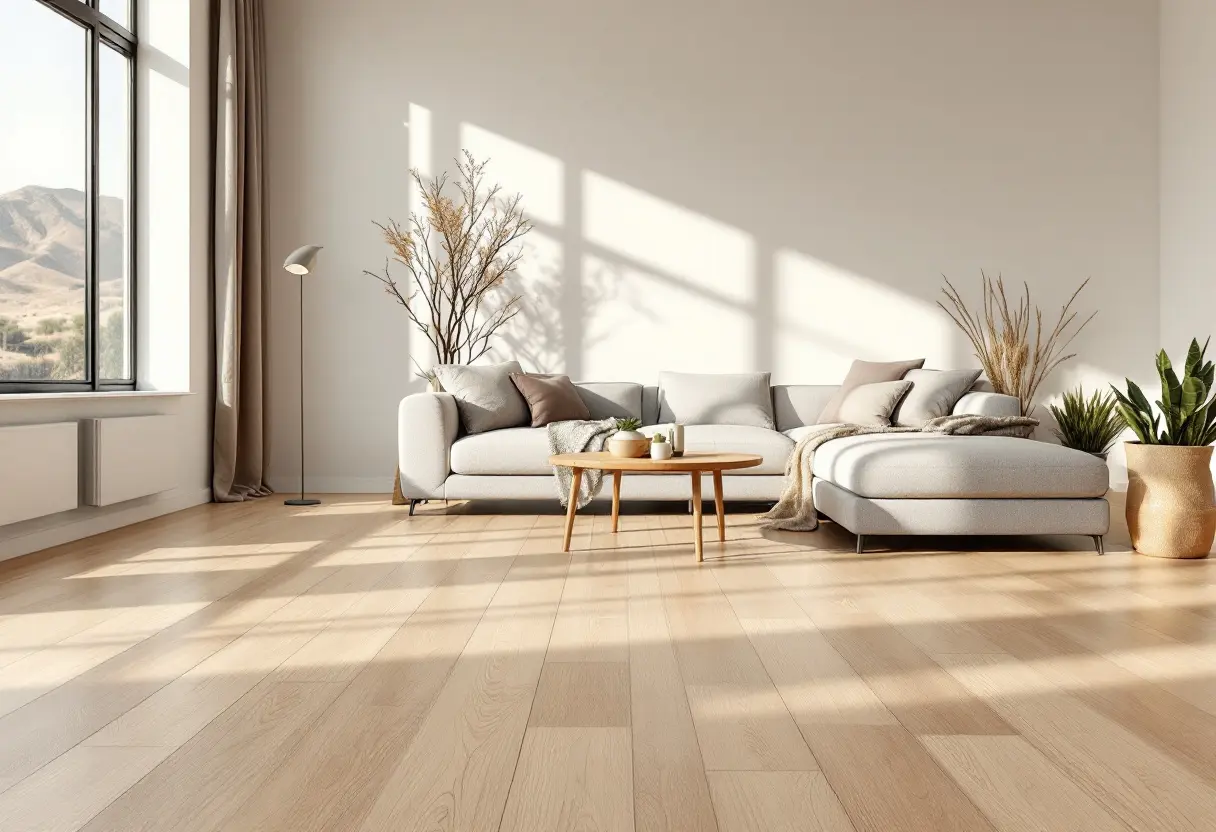
The short answer: for most homes, look for an AC3 or AC4 rating, a plank around 8 mm or thicker, an attached or separate underlayment, and a finish with a realistic embossed texture. Then keep it out of wet rooms. Here is what each of those terms means and why it matters.
What laminate actually is
Laminate is a layered floor. A high-density fiberboard (HDF) core sits under a printed photographic layer of wood, which is sealed by a clear, hard wear layer. The planks click together and float over the subfloor rather than being glued or nailed down. That construction is why laminate delivers a convincing wood look at a modest price,. Our laminate flooring page covers the full range we carry.
AC ratings: the durability score
The AC (Abrasion Class) rating tells you how well the wear layer resists scuffs, scratches and traffic. It runs from AC1 to AC5, and the right number depends on the room:
- AC1 to AC2: light use, such as a guest bedroom. Rarely worth choosing for a main living space.
- AC3: the standard for most homes. Handles living rooms, bedrooms and hallways with normal family traffic.
- AC4: a sensible upgrade for busy households, pets, entryways and home offices.
- AC5: built for heavy commercial traffic, which is more than most homes need.
If you have large dogs or kids who treat the hallway as a racetrack, go one step up. Our guide to flooring for pets and kids goes deeper on what holds up.
Thickness and the core
Laminate commonly comes in thicknesses from about 6 mm to 12 mm. Thicker planks feel more solid underfoot, sound less hollow and hide small subfloor imperfections better. A thicker plank also usually has a sturdier locking edge, which helps the joints stay tight over time.
- Around 7 to 8 mm: fine for flat subfloors and bedrooms.
- 10 to 12 mm: a better feel and better forgiveness, and worth the step up in main living areas.
Thickness alone is not quality, though. A thin plank with a good core and edge can outperform a thick, poorly made one, so check the maker's warranty and ask to see the locking edge up close.
Texture and finish
The most realistic laminate has embossed-in-register texture, where the grain you feel lines up with the grain you see. Wider, longer planks with a low-gloss finish tend to look the most natural and the most current. Bevelled edges add definition between boards, while square edges give a more continuous, modern look. Always look at samples in the room's own light, since a plank that reads warm in a showroom can look cooler by a bright window.
Underlayment: the layer you do not see
Laminate floats, so the underlayment beneath it matters. A good one smooths tiny flaws, cushions the planks, cuts the hollow clicking sound and, where needed, adds a moisture barrier. Many planks have a pad attached; others need a separate roll. Check which type your product requires, because using the wrong one can affect the warranty. This is a detail a skilled installer handles for you.
Water: the one real limit
Because the core is wood-based, standard laminate is water-resistant, not waterproof. A spill wiped up quickly is fine. Standing water, a leaking dishwasher or a wet-mopped floor can swell the edges. That is why we steer kitchens, bathrooms and laundry rooms toward luxury vinyl or sheet vinyl, and keep laminate for living rooms, bedrooms and hallways. The dry air in Carson City and across Northern Nevada is actually kind to laminate, but leave a proper expansion gap so the floor can move with the seasons.
| Bedroom | Living room | Entry / hall | Kitchen / bath | |
|---|---|---|---|---|
| AC rating | AC3 | AC3 to AC4 | AC4 | Choose vinyl instead |
| Thickness | 7 to 8 mm | 8 to 12 mm | 10 to 12 mm | n/a |
| Underlayment | Standard pad | Sound-dampening pad | Moisture barrier pad | n/a |
Why installation matters
Floating floors reward good prep. The subfloor needs to be flat and clean, the underlayment has to be the right one, and the perimeter needs an expansion gap that baseboards and trim then cover. Our installation is done by skilled installers, and we warranty our labor. For a rough sense of cost, see our flooring cost guide, and if you are still weighing materials, our LVP vs. laminate vs. hardwood comparison lays out the trade-offs. For the room-by-room view, read the best flooring for a high desert climate.
The bottom line
Pick AC3 or AC4, go as thick as your budget allows in main rooms, match the underlayment to the product and keep it dry. Do that, and laminate gives you a great wood look for years. Our estimates are free, and financing is available if you'd like to spread out the cost.