
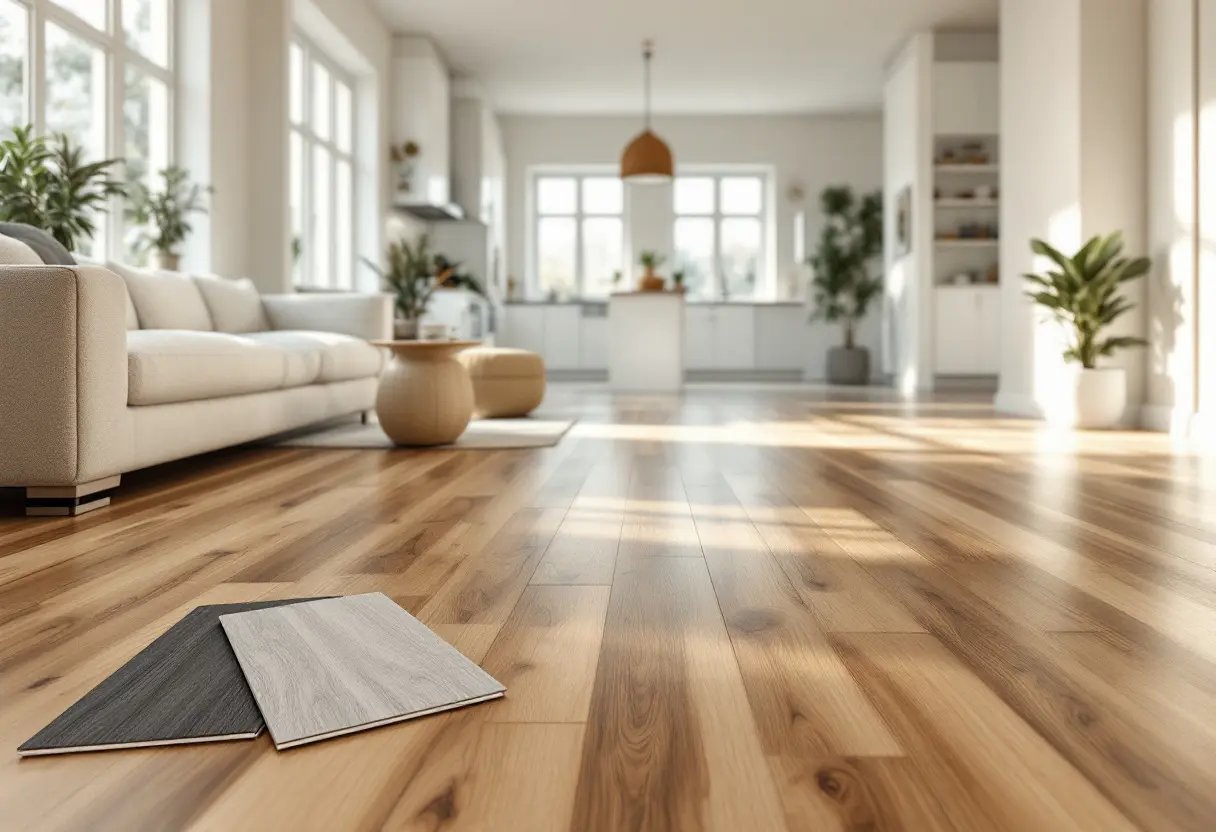
The short answer: three specs decide how a luxury vinyl plank floor performs: the wear layer (how long the surface lasts), the core (how it feels and handles heat and dents) and the install method. For most busy homes, a rigid-core plank with a wear layer around 20 mil is a safe place to start. Total thickness matters less than most people think.
Why two LVP floors can look alike and wear very differently
Luxury vinyl plank, or LVP, is popular for good reason. It is waterproof, it looks like real wood and it stands up to kids, pets and grit. The trouble is that two planks can look nearly identical on the sample board and perform very differently at home. The difference is in the spec sheet. Here is how to read it, one line at a time.
Wear layer: the spec that matters most
Every LVP plank is built in layers: a core, a printed design layer that gives the wood look, and a clear wear layer on top. The wear layer is what you actually walk on, and once it wears through, the pattern beneath has no protection.
Wear layer is measured in mil, which is one thousandth of an inch. It is not the same as a millimeter, and mixing the two up is the most common mistake shoppers make. A 20 mil wear layer is only about half a millimeter thick.
- 6 to 8 mil: light duty. Fine for a guest room or a low-traffic space on a tight budget.
- 12 mil: a common residential standard, suited to bedrooms and homes with moderate traffic.
- 20 mil and up: the stronger choice for kitchens, hallways, entries and homes with dogs, kids or a lot of coming and going. Many products at this level also carry a light commercial rating.
The finish on top of the wear layer counts too. Most quality planks add a urethane coating, sometimes reinforced with ceramic or aluminum oxide, that improves scratch and scuff resistance. That matters here, where the fine grit that blows in from the high desert acts like sandpaper underfoot. If you share your home with pets, our guide to the best flooring for pets and kids goes deeper on scratch resistance.
Core type: SPC, WPC or flexible vinyl
The core is the body of the plank. There are three main kinds, and each has a place.
- SPC (stone polymer composite): a dense, rigid core made mostly of limestone powder and vinyl. It is thin, very stable and resists dents from furniture and appliances. It also handles temperature swings well, which is useful in sunny rooms.
- WPC (wood polymer composite): a thicker, lighter core with a foamed structure. It feels softer and warmer underfoot and is quieter to walk on, but it can dent more easily under heavy point loads.
- Flexible (glue-down) LVP: a thin, bendable plank that is glued directly to a well-prepared subfloor. It is very stable once bonded, is common in commercial spaces and lets a single damaged plank be replaced without lifting the rest of the floor.
SPC and WPC are both sold as rigid core, and both are waterproof. The choice between them is mostly about feel versus dent resistance.
Plank thickness: thicker is not always tougher
Total thickness is the number printed largest on many boxes, usually somewhere between 4 and 8 millimeters for rigid-core planks, and less for glue-down. It is easy to assume the thicker plank is the more durable one. It is not that simple. A thinner SPC plank with a 20 mil wear layer will typically outlast a thicker plank with a 6 mil wear layer, because surface wear is decided by the wear layer and not the core.
Thickness still matters for other reasons. A thicker plank feels more solid, is a little quieter and is more forgiving over minor subfloor imperfections. It also changes how the new floor meets the next room, so door clearances and transitions to carpet or tile are worth checking before you order.
Attached pad and underlayment
Many rigid-core planks come with a thin pad already attached to the back. It softens the step, cuts down on sound and saves a step at install. If the plank has an attached pad, adding a second cushion beneath is usually not recommended, because too much give can stress the locking joints. Follow the manufacturer's instructions on this one, since they vary by product and it can affect the warranty. Our laminate buying guide covers underlayment in more detail, and much of it applies here.
Click-lock or glue-down?
Rigid-core LVP usually installs as a floating floor. The planks click together and rest on the subfloor without being fastened to it, with a small gap left at the walls so the floor can expand and contract. Glue-down LVP is bonded to the subfloor with adhesive.
Either way, the subfloor decides how the finished floor looks. Vinyl follows what is beneath it, so dips, humps and old adhesive ridges need to be dealt with first. Good prep is most of the job, which is why we use skilled installers and warranty our labor. You can read how the process works on our luxury vinyl installation page.
| Spec | What it tells you | What to look for |
|---|---|---|
| Wear layer (mil) | How long the surface lasts | 12 mil for light use, 20 mil or more for busy homes |
| Core | Feel, dent resistance, heat stability | SPC for sun and dents, WPC for comfort |
| Thickness (mm) | Feel, sound, transitions | Enough to feel solid, checked against door clearances |
| Install method | How it goes down and comes up | Click-lock for most homes, glue-down for commercial spaces |
What Northern Nevada sun means for your choice
We get strong sun and big swings between day and night temperatures. Vinyl expands as it warms, and a floor sitting in direct sun behind a large south- or west-facing window can get much hotter than the room around it. A dense SPC core copes with this better than softer cores, and blinds or shades during the hottest part of the day help any floor. Leaving the right expansion gap at install matters too. For a room-by-room look at how our climate affects floors, see the best flooring for a high desert climate.
What "waterproof" does and does not mean
The plank itself is waterproof, so a spill, a wet dog or a mopped floor will not hurt it. That does not make the whole floor a sealed tub. Water that finds its way under the planks, from a leaking dishwasher for example, can still reach the subfloor, so leaks need attention no matter what is on top. If you want a floor with almost no seams for a bath or laundry room, compare the options in sheet vinyl vs. LVP.
Five questions to ask before you buy
- What is the wear layer in mil, and what finish is on top of it?
- Is the core SPC, WPC or flexible vinyl?
- Is a pad attached, and does the maker allow extra underlayment?
- What does the warranty cover for a home, and what does it require for sunny rooms or wet areas?
- What subfloor prep does my room need before the floor goes down?
The bottom line
Buy LVP by the wear layer first, the core second and the thickness third. Match those to how each room is used and the floor will look good for years. Still deciding between materials? Our LVP vs. laminate vs. hardwood comparison lays out the trade-offs.
When you are ready, come see and feel the difference in person. Browse our luxury vinyl flooring, visit the showroom in Carson City, or request a free estimate. Financing is available.